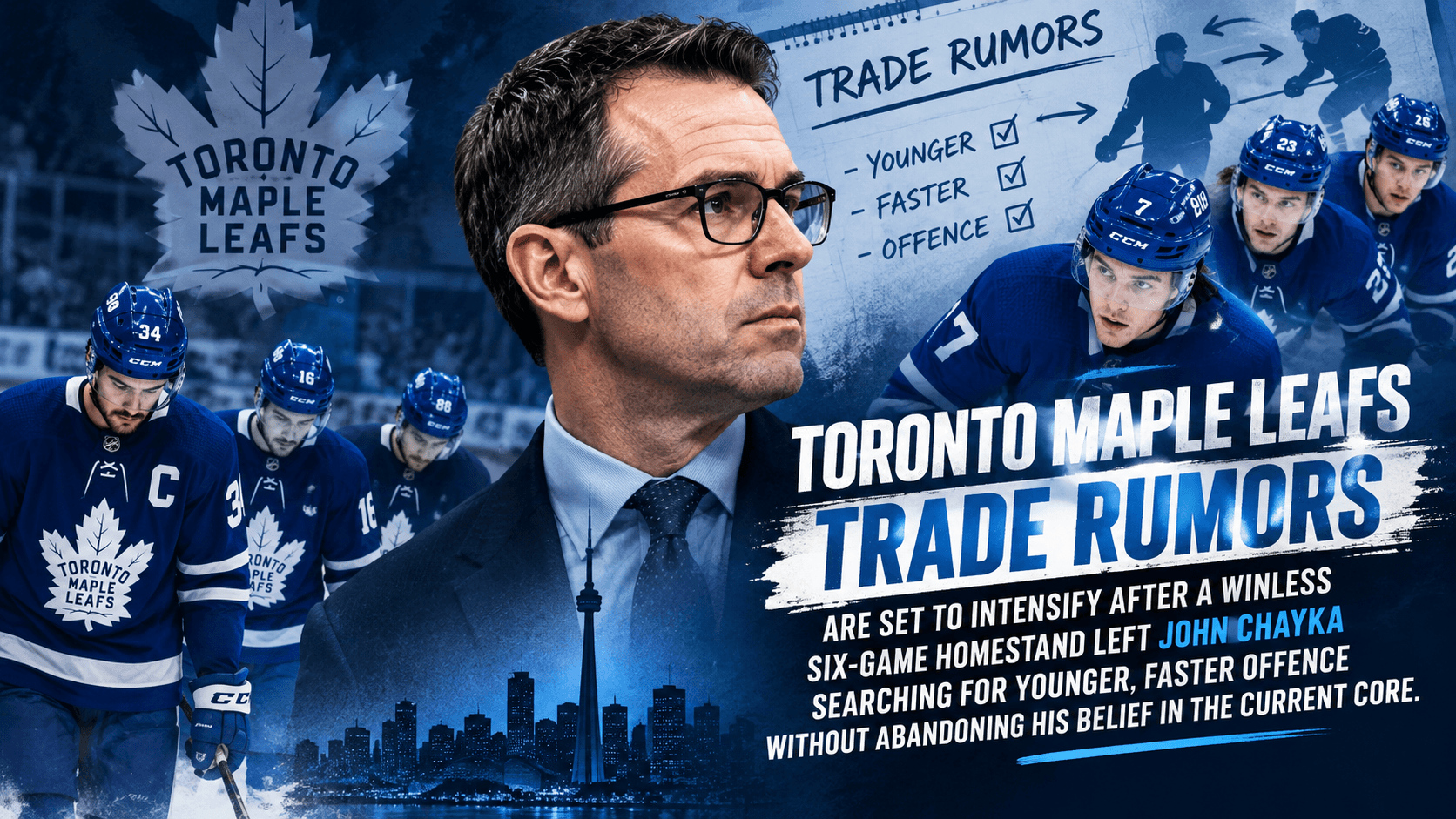
Toronto Maple Leafs Trade Rumors: John Chayka Seeks Youth and Offence
Toronto Maple Leafs trade rumors are gaining real force after an ugly six-game home losing streak sharpened the stakes around the club. Toronto was outscored 23-9 during the 0-6 homestand, an unacceptable stretch for a team trying to stay relevant in the playoff chase.
John Chayka has not abandoned the group, but his preferred direction is clear: add youth, mobility and offence. That is more than a short-term shopping list. It is a signal that Toronto must become quicker and more dynamic while facing the reality of an aging roster and roster-building constraints.
John Chayka’s roster blueprint
Chayka’s focus on younger, mobile players points toward a selective retool rather than a full teardown. Toronto needs players who can turn defensive stops into clean exits, play with pace and contribute scoring without forcing management into a drastic decision immediately.
The club believes its defensive game has improved somewhat, but the homestand exposed a familiar problem: better structure means little when the offence cannot produce enough pressure or finish chances. The immediate prediction is that Chayka explores additions with term or developmental upside before considering major core changes. Any move that merely adds an older rental would clash with the stated plan unless it also brings speed and scoring value.
Auston Matthews trade speculation remains complicated
Auston Matthews is the franchise-defining name hanging over every Toronto Maple Leafs trade rumours conversation. He has one year remaining on his contract and possesses a full no-move clause, giving him control over any potential destination.
The prediction here is that Matthews stays put for now. Toronto has every incentive to delay that enormous decision while it evaluates whether the current season can be rescued and whether a targeted infusion changes the team’s trajectory. But a prolonged slide would make the question unavoidable. A Matthews trade would reshape the organization overnight, demanding a return built around elite young talent, premium futures and immediate NHL help. It would also force a wider decision on the rest of the veteran core.
William Nylander faces the ripple effect
William Nylander is not the immediate trade focal point, but his place in Toronto’s long-term picture is tied to the Matthews question. If management continues pursuing a competitive retool, his high-end offensive ability remains central to any attempt at a rapid rebound.
If the club pivots toward a deeper reset, Nylander becomes part of the difficult conversation rather than an automatic departure. The practical implication is simple: Toronto should resist selling talented offence merely to react to one disastrous homestand.
John Tavares remains a key leadership variable
John Tavares represents another major decision point if the standings continue to deteriorate. His experience and offensive history make him valuable to a team trying to stabilize, while his veteran status also underscores Chayka’s desire to inject younger legs.
The likeliest outcome is patience. Moving Tavares would signal a far more decisive reset, while retaining him preserves leadership during a period when the club needs a response, not panic.
Chris Tanev and Jake McCabe anchor the defence question
Chris Tanev and Jake McCabe are pivotal to Toronto’s defensive identity. With management seeing progress in its own-zone game, breaking up the blue line quickly would be counterproductive unless a move delivers the mobility and youth Chayka covets.
Tanev’s veteran presence and McCabe’s role make both important barometers of intent. Keeping them would indicate Toronto still believes it can correct course. Trading either would send a louder message that the organization is looking beyond the current season.
Jim Hiller has time to find answers
Head coach Jim Hiller retains full management support, and that stability matters. The prediction is that Toronto gives Hiller time to work through the adversity rather than making a quick coaching change. The players, not the bench, must supply the immediate correction.
Future outlook
The most likely near-term move is a search for a younger, mobile forward who can help the offence now. A depth addition with speed is also plausible, while a major Matthews decision remains the true wildcard. Toronto’s next response will determine whether this becomes a repair job or the beginning of a far larger retool.
International hockey correspondent specializing in European leagues and Olympic hockey coverage.